
Restorative Care
Permanent, natural-looking tooth replacement built around your comfort, bite, and long-term oral health.
Losing a tooth changes more than your smile. It changes how you chew, how your remaining teeth bear pressure, and often how confident you feel speaking or laughing in front of other people. Over time, an empty space in your jaw allows the surrounding bone to shrink, neighboring teeth to shift out of alignment, and your bite to become uneven. At Havens Family Dental, we see patients in Blacklick every week who have been living with a gap far longer than they should, usually because they assumed replacement meant something complicated or uncomfortable.
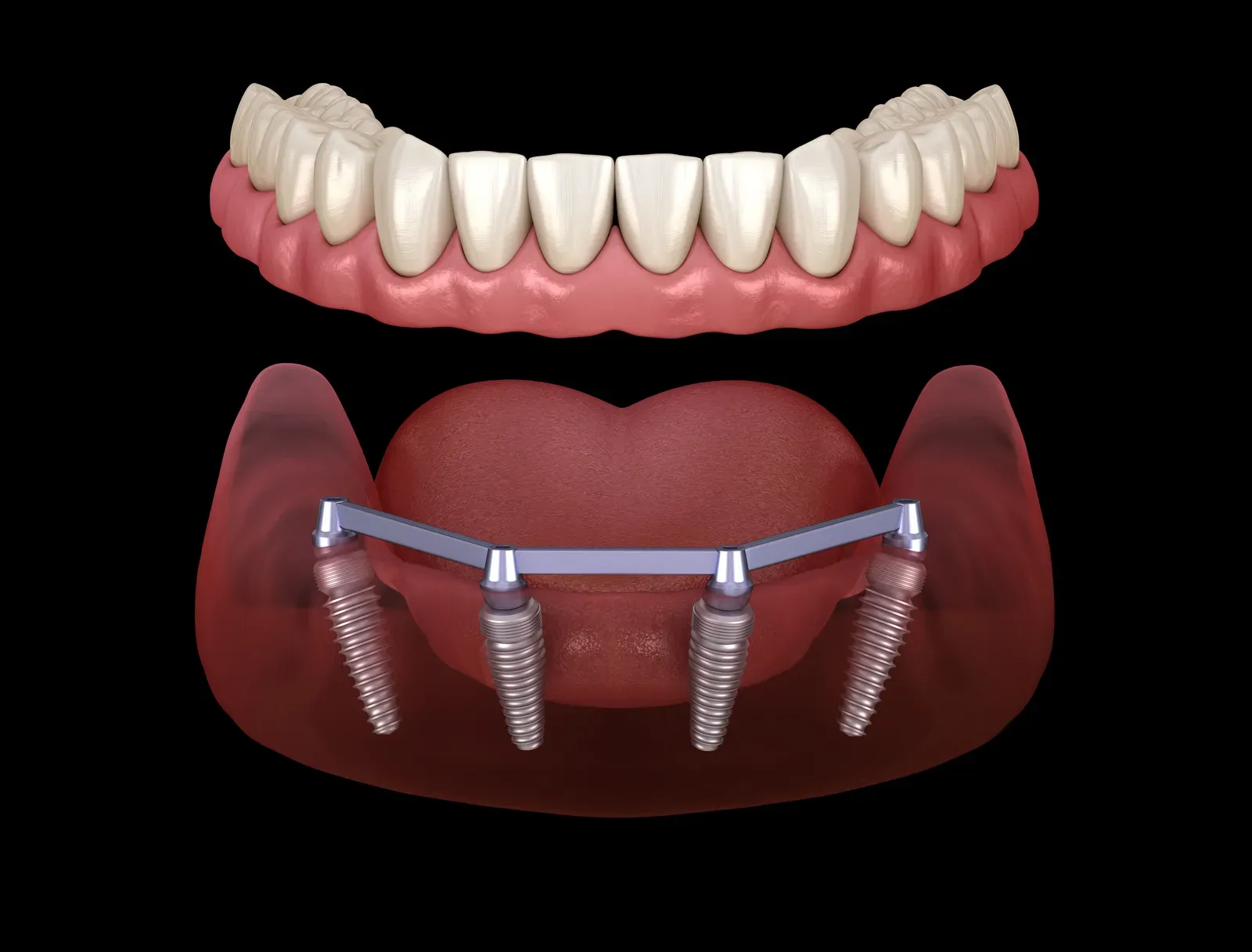
A dental implant is a small titanium post placed directly into the jawbone, where it fuses with living bone over several months and functions as an artificial tooth root. Once healed, it supports a custom crown, bridge, or denture that looks and performs like a natural tooth. Unlike a removable partial or a traditional bridge, an implant does not rely on adjacent teeth for support, so healthy teeth next to the gap stay untouched and intact.
Our approach starts with a thorough evaluation of your bone density, gum health, and bite before we ever discuss a treatment plan. We want you to understand exactly why implants are or are not the right fit for your situation, what the timeline looks like, and what results you can realistically expect. That honest, detail-oriented conversation is what guides every implant case we treat.
Not everyone experiences tooth loss the same way, and the effects can show up gradually rather than all at once. Below are common signs we hear from patients in Blacklick who turn out to be excellent implant candidates once we complete a full evaluation.
If any of these sound familiar, the only way to know for certain whether implants are right for you is a clinical evaluation. Waiting typically allows bone loss and bite problems to progress, which can make future treatment more involved.
Tooth loss rarely happens for just one reason. Understanding what led to it helps us plan an implant approach that addresses the underlying cause, not just the visible gap.
When a cavity goes untreated for too long, infection can spread into the root and surrounding bone, making the tooth impossible to save with a filling or crown.
Chronic gum infection breaks down the bone and ligaments holding teeth in place, often leading to gradual loosening and eventual tooth loss if not managed early.
A sports injury, fall, or accident can fracture a tooth below the gum line or knock it out entirely, requiring replacement to restore both function and appearance.
Occasionally a previously treated tooth develops a new infection or fracture that can't be resolved with retreatment, making extraction and implant placement the more reliable path forward.
Years of untreated clenching or grinding can crack teeth or wear them down to the point that a crown or filling no longer has enough structure to attach to.
Some patients are simply born without one or more permanent teeth, and an implant offers a stable, long-term way to fill that gap once jaw growth is complete.
Every implant case we treat is planned around your specific bone structure, bite, and goals. Here is what the journey typically looks like at Havens Family Dental.
We start by listening to your concerns, reviewing your dental history, and discussing what you'd like the end result to look and feel like. This visit sets the foundation for everything that follows.
Digital x-rays and a detailed exam of your bone density, gum tissue, and bite give us a complete picture of your oral health and confirm whether implants are the right approach.
We map out the number of implants needed, whether any bone grafting is required, and a realistic timeline so you know exactly what to expect before treatment begins.
The implant post is placed under local anesthesia in a comfortable, controlled appointment. Over the following months, the post fuses securely with your jawbone, a process called osseointegration.
Once healed, we attach a custom-matched crown, bridge, or denture to complete your smile. We'll check in during follow-up visits to confirm everything is functioning comfortably long term.
A well-placed implant does more than fill a visible gap. It restores function and stability that patients often don't realize they've been missing until it's returned.
An implant restores close to full natural biting force, so foods you may have avoided for years are back on the table without discomfort or caution.
Because the implant post stimulates the jawbone the way a natural root does, it helps prevent the bone loss and facial changes that come with untreated tooth loss.
Unlike loose dentures, an implant stays firmly in place, so there's no shifting, clicking, or slurred words while you're talking or eating in public.
Because an implant doesn't rely on neighboring teeth for support, those teeth stay untouched, unlike a traditional bridge that requires grinding down healthy enamel.
Patients frequently tell us they feel more at ease in photos, conversations, and everyday interactions once the gap is gone and the restoration looks completely natural.
With proper care and regular checkups, dental implants are designed to last for decades, making them one of the most durable tooth replacement options available.
An implant's long-term success depends almost entirely on the quality and volume of bone surrounding it. The jawbone needs enough density and height to fully surround the titanium post, allowing the bone cells to grow directly onto its surface during osseointegration. Without adequate bone, the implant can fail to stabilize properly or may not integrate at all, which is why our evaluation always includes detailed imaging before we recommend treatment.
When a tooth has been missing for an extended period, the bone that once supported its root begins to resorb, or shrink, because it no longer receives the stimulation from chewing forces. This is especially common in patients who have worn a removable denture for years, since dentures rest on the gum tissue rather than transmitting pressure into the bone the way a natural tooth root does.
In cases where bone volume has diminished, a bone graft can rebuild the site over several months, creating a stable foundation for implant placement afterward. This extra step adds time to the overall process, but it significantly improves the odds of a secure, lasting result rather than placing an implant into a site that can't properly support it.
Dental implants don't get cavities, but the gum tissue and bone around them still need consistent care to stay healthy for the long run.
Clean around the implant crown just as thoroughly as your natural teeth to prevent plaque buildup near the gum line.
Harsh abrasives can scratch the crown's surface over time, so a gentle, non-abrasive toothpaste is a better daily choice.
Ice, pens, and hard candy can crack an implant crown just as they can a natural tooth, so it's best to avoid them altogether.
If you grind your teeth at night, a custom nightguard helps protect both the implant restoration and your remaining natural teeth.
Regular professional cleanings let us monitor the gum tissue around the implant and catch any early signs of irritation.
Smoking slows healing and increases the risk of implant failure, both during the integration period and years after placement.
These habits support the lifespan of your implant, but they're not a substitute for regular professional checkups, which remain the best way to catch small issues before they become larger ones.
"Our goal is for every implant patient to leave feeling like they got their smile back, not like they underwent a procedure. We walk through each step together so there are no surprises along the way."
Answers to the questions we hear most often from patients in Blacklick considering dental implants.
BOOK YOUR VISIT
Join the Blacklick families who trust Havens Family Dental. New patients and emergencies are always welcome.
 1582 N Waggoner Rd Ste b, Blacklick, OH 43004
 614-762-2737